Dental SEO: a practical guide for dentists
What dental SEO actually is, how patients search, and what to fix first — in plain language, no jargon.
Google ranks pages, not websites. If your implants service is one paragraph on a general services page, it will not rank for implant searches. We build real pages for real treatments.
Dental SEO service
On-page SEO is the work done on your own website: the titles, the headings, the words on the page, and how pages link to each other. It sounds basic, and it is — which is why it gets skipped. Most dental websites we audit have the same problems: one page trying to rank for ten services, titles that say "Services" instead of what the service is, and no page at all for the treatments patients search for most.
The fix is straightforward but it takes time. Each treatment gets its own page. Each page answers the questions a patient asks before booking: what the treatment is, who it is for, what it costs to start, what the visit is like, and how to book. The page is structured so Google can read it — one clear title, headings in the right order, and links to related pages.
Good on-page work also helps patients. A nervous patient reading a clear, honest page about a root canal is more likely to book than one reading a page full of jargon. Search engines and patients want the same thing here: a clear answer.
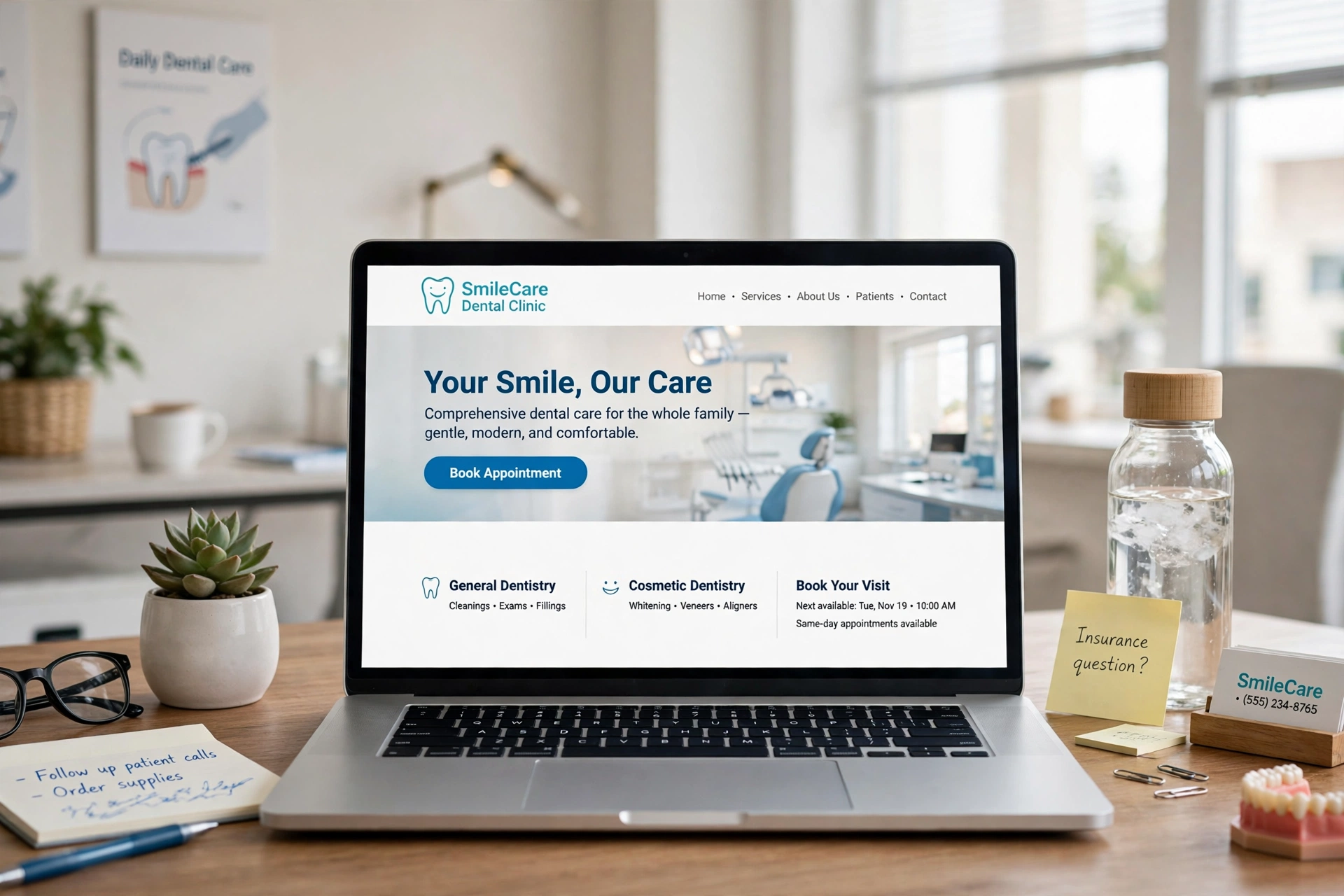


It starts with a title a patient would understand, not a keyword stuffed into a sentence. It explains the treatment in plain words, says who it is for, what the first visit looks like, what it costs to find out more, and how to book. It has real photos, real reviews nearby, and a clear way to call or book. It links to related pages — a veneers page links to whitening and smile design, an implants page links to dentures and consultations.
It does not promise results it cannot guarantee, and it does not hide the important information three clicks deep. Patients decide fast. A good page respects that.
Related: Keyword research · Content & editorial · Technical SEO
It depends on your services, but most practices need more pages than they have. At minimum: one page per treatment you want patients to find you for, plus location pages for your area. A practice offering ten treatments with five pages is asking five of those treatments to stay invisible.
We write it. You review it for accuracy — especially anything about treatments, pricing, or insurance. Your clinical knowledge plus our search knowledge is what makes a page both correct and findable.
Done properly, no. Titles are changed to match the searches a page should rank for, and changes are made carefully, a few at a time, with rankings tracked before and after. A bad title that ranks for nothing is not worth protecting.
Schema is structured data added to a page that helps Google understand what the page is about — a dental practice, a service, a set of FAQs. It is not magic, and it does not guarantee special results, but it is standard practice for a professional site and we include it on every page we build.
From the blog
What dental SEO actually is, how patients search, and what to fix first — in plain language, no jargon.
What affects the scope of a dental SEO plan, what happens month to month, and the questions to ask any agency.

What to do before you open, in the first 30 days, and by day 90 — plus the mistakes new practices make.
Get a free SEO audit. We look at your Google Business Profile, your rankings, and your top local competitors — and send you a clear list of what to fix first.