Dental SEO: a practical guide for dentists
What dental SEO actually is, how patients search, and what to fix first — in plain language, no jargon.
Not every search is worth ranking for. We find the ones your future patients actually type — and the ones your competitors have missed.
Dental SEO service
Keyword research for a dental practice is not about finding the most popular searches. "Dentist" is popular, and it is also the hardest search to rank for and the least specific. The searches that bring patients are narrower: a treatment plus a place, a problem plus a solution, a question a patient asks before booking.
We research in three directions. First, treatments: every service you offer, in the words patients use, not the words dentists use. Second, places: your city, your neighborhoods, and the towns around you. Third, intent: the difference between someone researching ("how much do veneers cost") and someone ready to book ("emergency dentist open now"). Each kind needs a different page.
The output is a simple plan: which searches to target, which pages to build for them, and in what order. It is the document the rest of the work follows — and we redo it regularly, because search behavior changes.
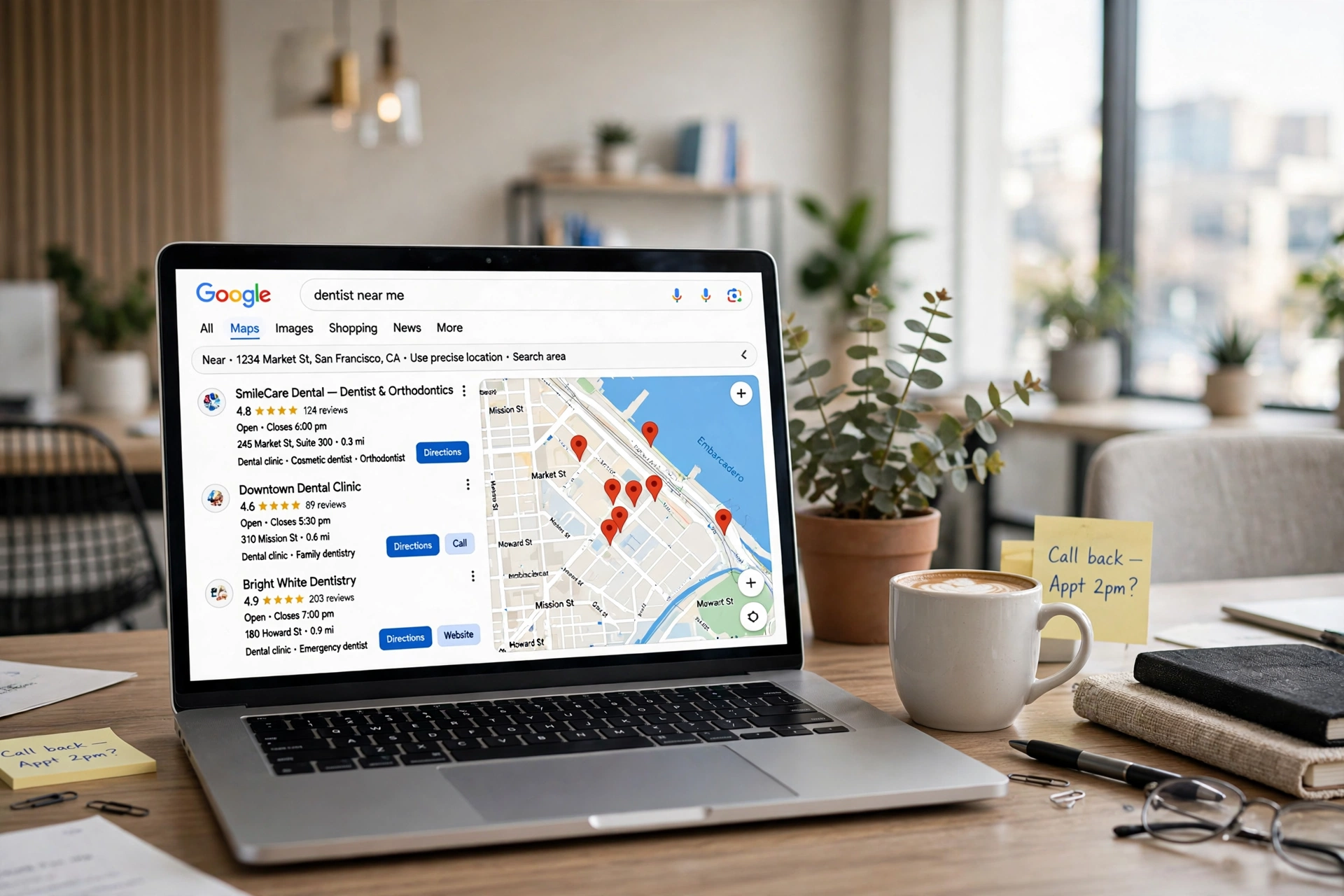

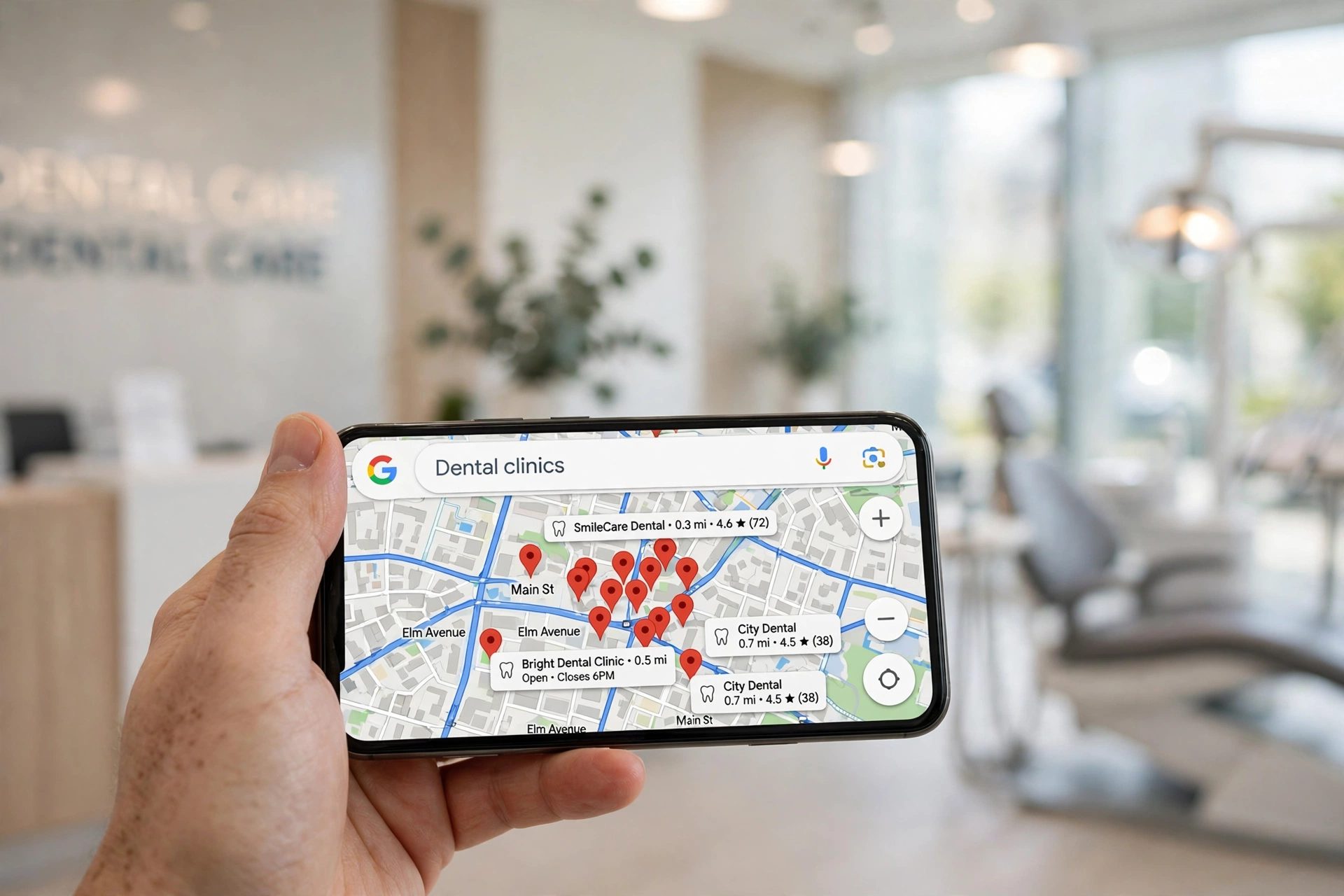
The biggest gap is usually cost and insurance questions: "how much does a root canal cost", "dentist that accepts Medicaid", "dental implants payment plans". Patients search these constantly, and most dental sites say nothing about them — which means the practices that do answer them win those patients.
The second gap is neighborhood searches. Patients search for a dentist in their neighborhood, not just their city. A page for your neighborhood, with real local detail, can outrank a big city page that says nothing specific. Our location pages are built on the same idea.
Related: On-page SEO · Content & editorial · Local SEO & Map Pack
We look at three things: how many people search for it, how hard it is to rank for, and whether the searcher is likely to become a patient. A search with modest volume and clear booking intent is usually worth more than a popular search from people who will never call.
No. Ranking for a treatment you do not offer brings calls you cannot help, and it wastes effort that should go to the treatments you do offer. Your keyword plan should match your actual services.
A full refresh once or twice a year is enough for most practices, with smaller updates when you add a service or open in a new area. Search behavior shifts gradually, not overnight.
Intent is what the searcher wants: information, a comparison, or an appointment. A page that tries to sell to someone who is still researching will not convert, and a page that only informs someone ready to book will lose them. Matching the page to the intent is half the job.
From the blog
What dental SEO actually is, how patients search, and what to fix first — in plain language, no jargon.

Early signs in weeks, steady growth in three to six months — what changes first, what slows it down, and how to tell it is working.
What affects the scope of a dental SEO plan, what happens month to month, and the questions to ask any agency.
Get a free SEO audit. We look at your Google Business Profile, your rankings, and your top local competitors — and send you a clear list of what to fix first.