Google Business Profile for dentists
Categories, services, photos, reviews, and the mistakes that quietly cost practices new patients.

Reviews are the first thing a patient reads after finding you on Google — and often the reason they call you instead of the practice down the road. A practice with fifty genuine reviews will beat a practice with five, even if everything else is equal. The good news is that earning reviews is mostly a matter of asking, at the right moment, and making it easy.
Patients trust other patients more than they trust any website. Before they call, they check your star rating, read a few recent reviews, and look at how you reply. Google watches the same things: the number of reviews, how recent they are, and whether you reply. Reviews are one of the few ranking factors you can directly influence, and they are free. A steady flow of new reviews tells Google your practice is active and trusted — and tells patients the same thing.
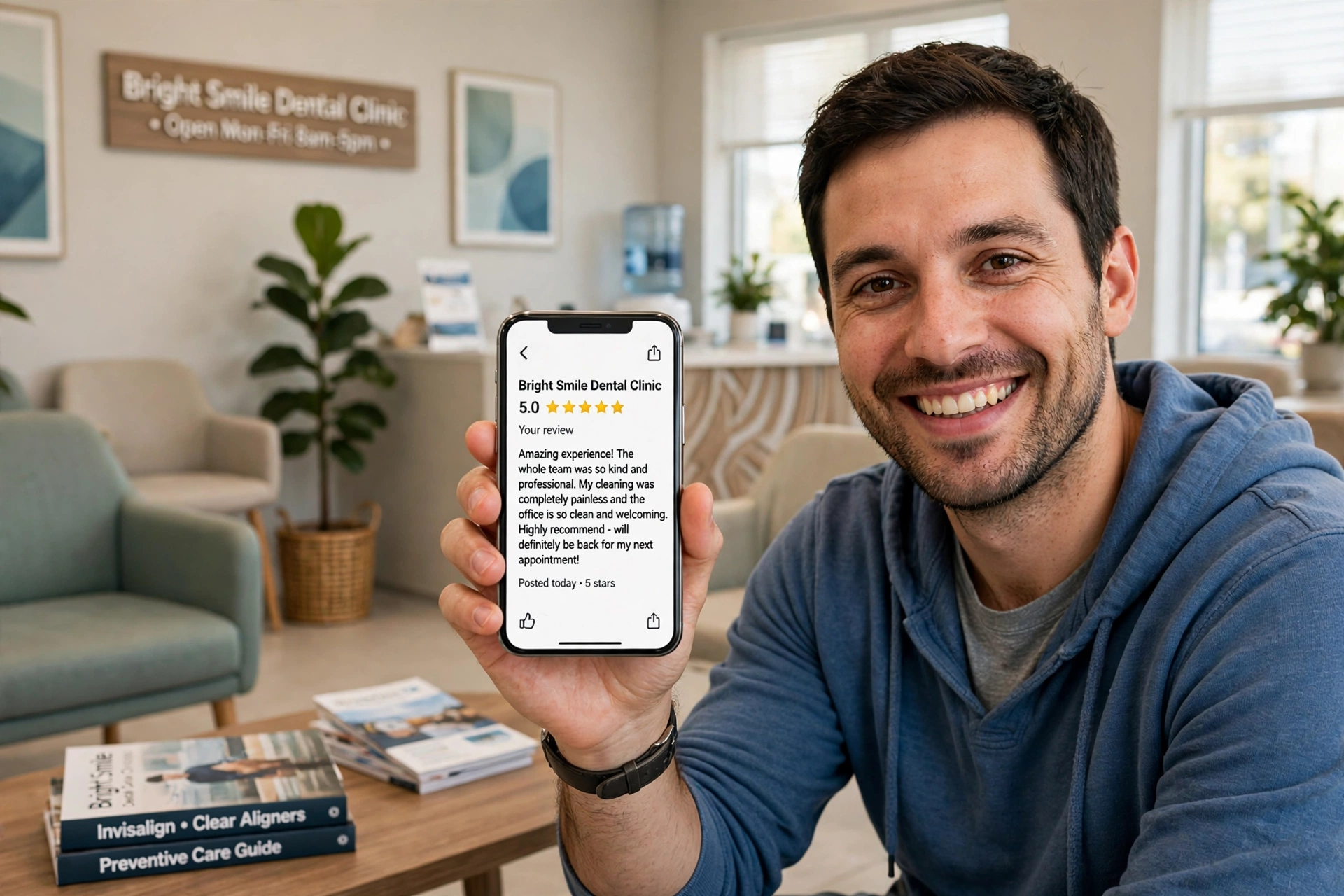
The best time to ask is right after a good visit, while the patient is still happy — at checkout, or in the follow-up message the same day. Do not ask a patient who is in pain, or one who had a problem; ask the ones who smiled on the way out. A simple line works: "If you were happy with your visit, would you mind leaving us a Google review? It helps other patients find us." Most patients who are asked, say yes. Most practices never ask.
Every extra step loses people. Send the patient straight to your review page — a direct link, not your homepage. A short link in a text message after the appointment works best; an email works too. A QR code at reception works for patients who prefer it. The review itself takes less than a minute, and the easier you make it, the more reviews you get. One link, one tap, done.
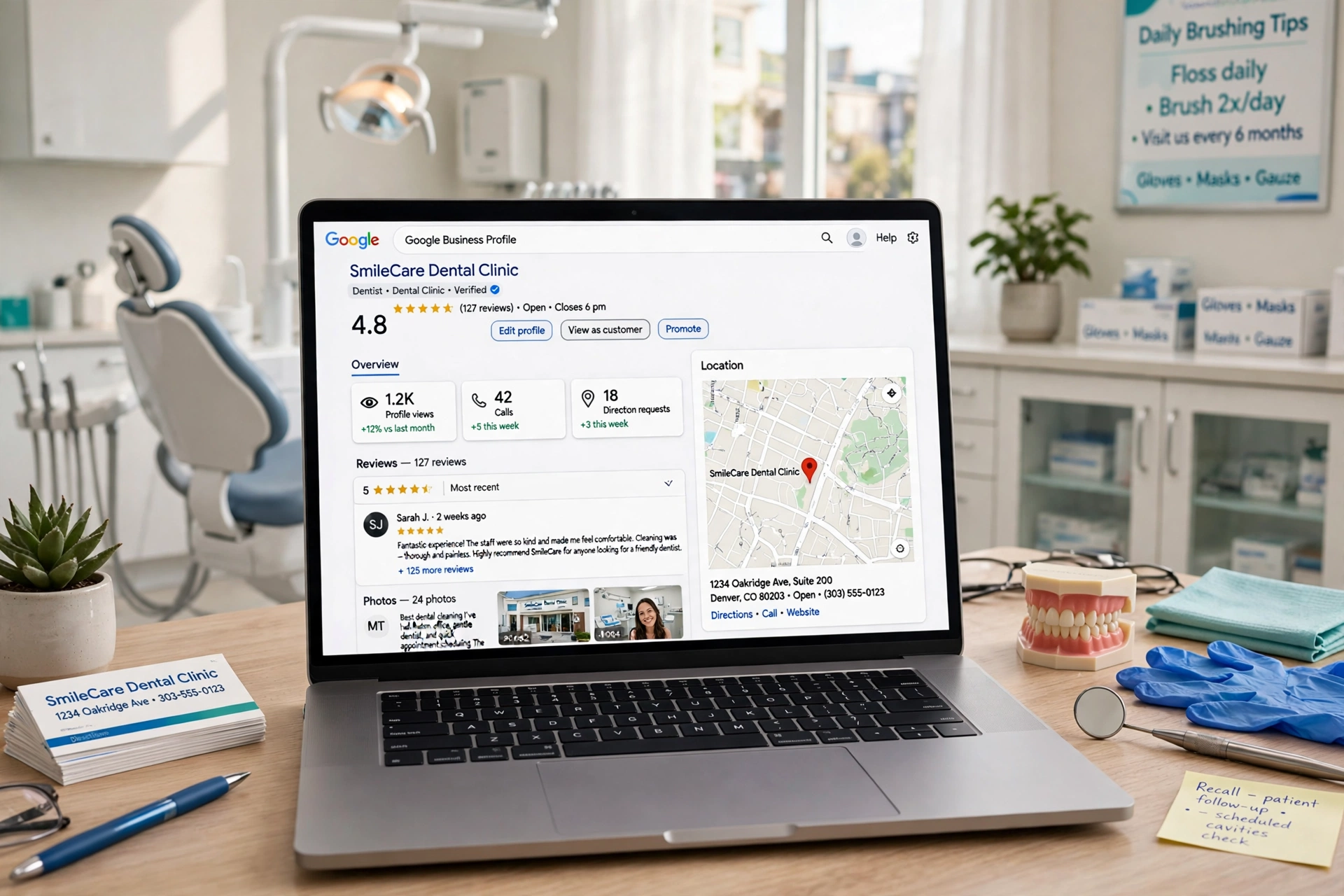
More than the practices around you. If the top practice in your area has forty reviews, you need more than forty — and you need them to keep coming. A practice with a hundred reviews from two years ago looks worse than a practice with sixty reviews, ten of them from this month. Recency matters: Google and patients both trust fresh reviews more. Aim for a few new reviews every week, not a flood once a year.
Every practice gets one eventually. Reply calmly and briefly, thank the patient for the feedback, and invite them to contact the practice directly — never discuss treatment details in public. A professional reply shows future patients how you handle problems, and it often matters more than the review itself. Never argue, never ignore it, and never ask the patient to remove it in exchange for something. Most readers can tell an honest reply from a defensive one.
Never buy reviews, and never offer a discount or a gift in exchange for one. Google forbids it, and it can get your profile suspended — and patients can usually tell. Never write reviews for yourself, and never ask staff or family to do it. The only reviews worth having are genuine ones from real patients. They are slower to earn, and they are the only ones that last.
Reviews are one part of a plan that also covers your profile, your rankings, your website, and your citations. Want to know where your practice stands? Request a free audit — we will review all of it and send you a clear list of what to fix first.
Ask once, at the right moment — right after a good visit — and make it easy with a direct link. Most happy patients are glad to help; the ones who are not will simply ignore the message.
Yes, to the good ones and the bad ones. A short, genuine reply shows patients you are paying attention, and it tells Google your profile is active.
Only if it breaks Google's rules — for example, if it is fake, or from someone who was never a patient. You can report it, but Google removes very few reviews. A good public reply is usually the better answer.
A few every week is a good pace for most practices. What matters is that they keep coming — a steady flow beats a one-time flood.
From the blog
Categories, services, photos, reviews, and the mistakes that quietly cost practices new patients.
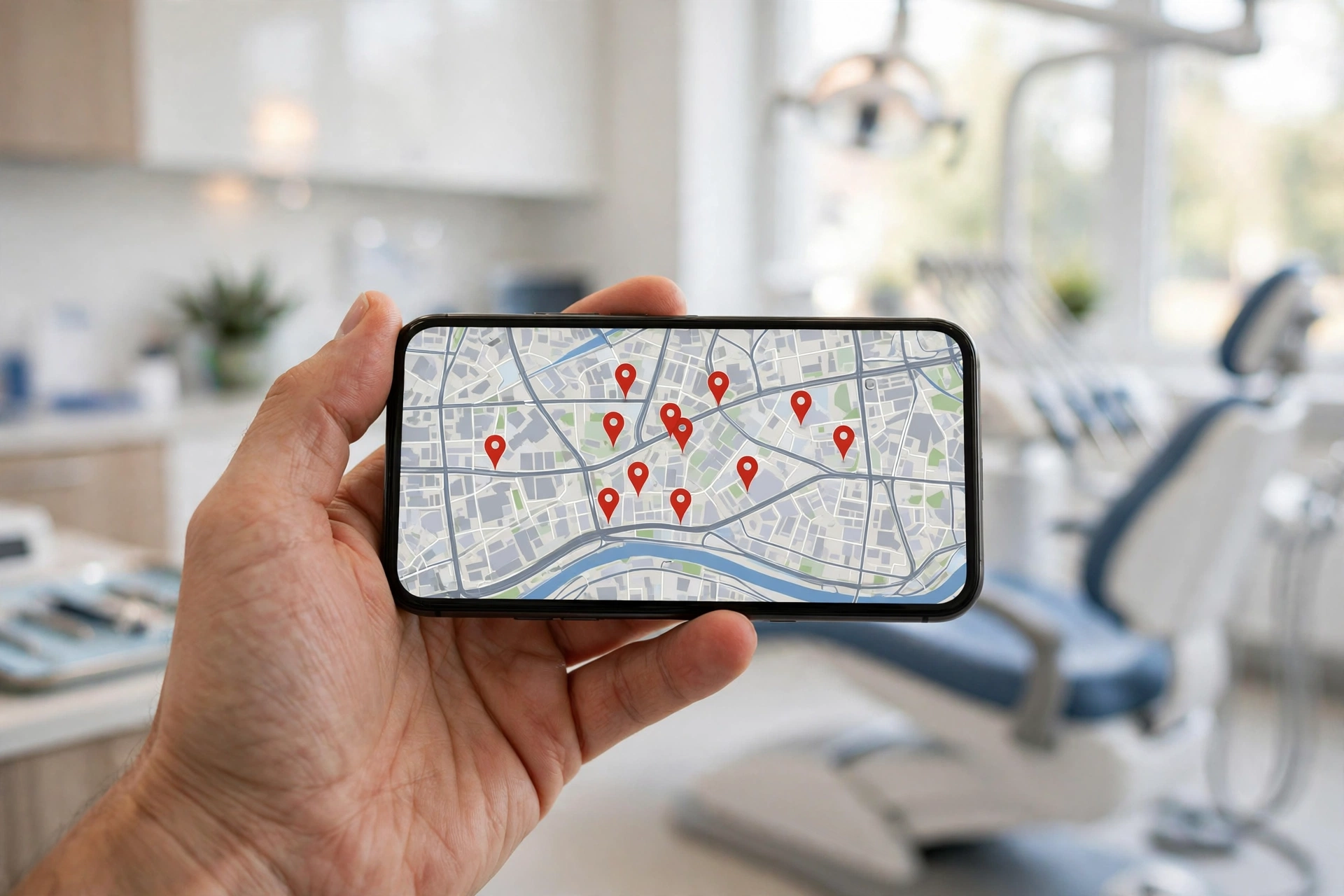
The three practices at the top of "dentist near me" get most of the calls. Relevance, distance, and prominence, explained plainly.

What to do before you open, in the first 30 days, and by day 90 — plus the mistakes new practices make.
Get a free SEO audit. We look at your Google Business Profile, your rankings, and your top local competitors — and send you a clear list of what to fix first.